Use promo code “NEWCUSTOMER” for 20% off your first cleaning.

Blog

  • Is It Time for a Deep Clean? A Quick Guide for Opa Locka, FL Homes

    Is It Time for a Deep Clean? A Quick Guide for Opa Locka, FL Homes

    Most people do not schedule a deep clean because they are not sure they need one. The house looks fine. Nothing is obviously dirty. It feels like an expense that could wait another month, and then another.

    Here is a faster way to decide than guessing.

    The Five-Minute Check

    Walk through your home and look at five specific things. Not the floors, not the counters, not the places you already clean.

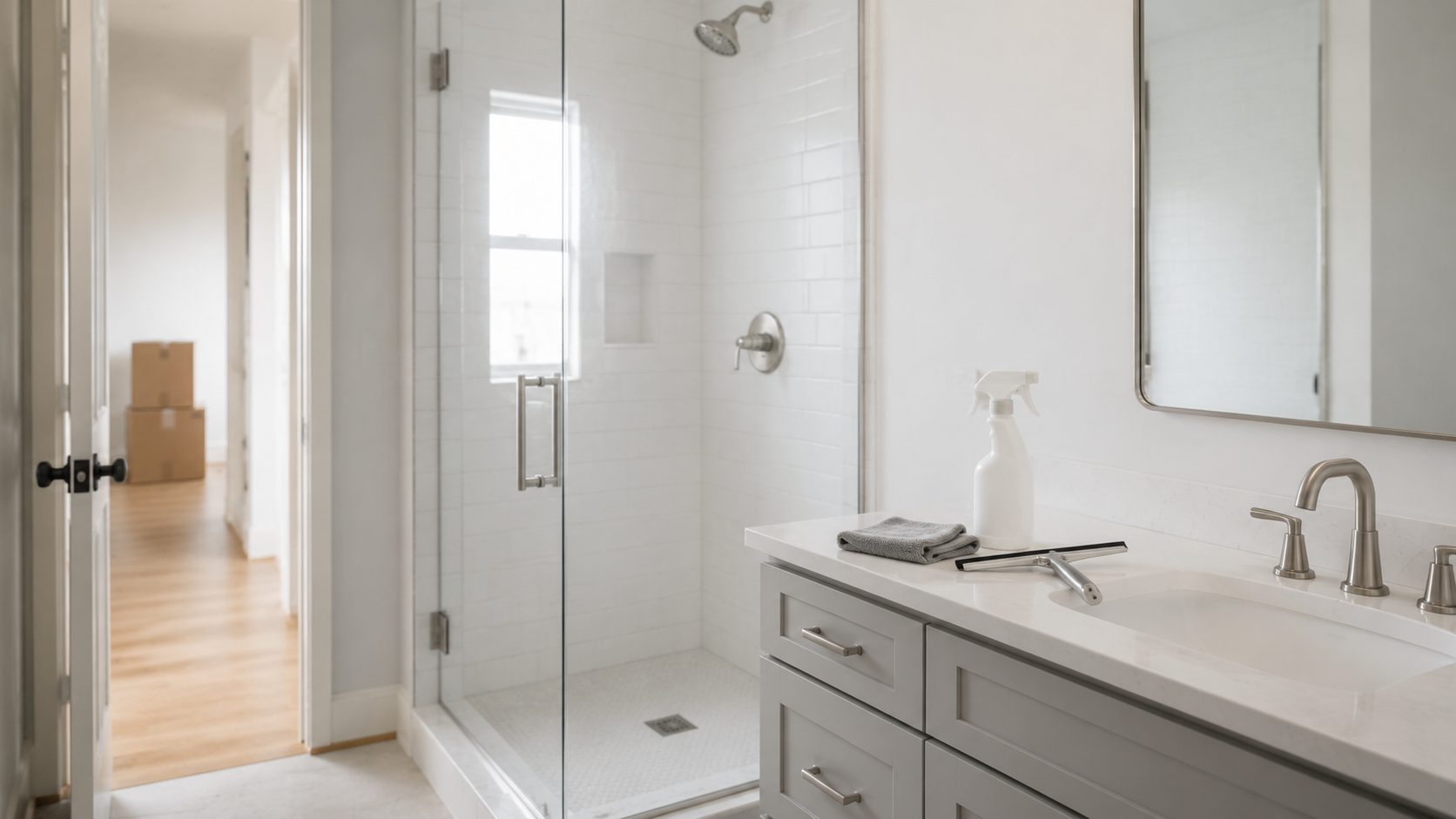
    Look at the shower glass at eye level, the grout in the bathroom you use most, the top edge of a baseboard behind furniture, the blades of a ceiling fan, and the base of your kitchen faucet where it meets the counter.

    If three or more of those look worse than the rest of your home, you need a deep clean. Not more frequent standard cleanings, not better products. Those surfaces have accumulated buildup that routine cleaning is not designed to remove.

    How Often Homes in [Cuidad] Actually Need One

    Twice a year is the minimum for a low-traffic home that already has recurring standard cleanings in place. Think single professionals, couples without kids or pets, and anyone who travels frequently.

    Every three to four months is the realistic target for an average family home, and every three months for households with young children, multiple pets, or anyone with allergies or asthma. These homes generate buildup faster than a twice-yearly reset can absorb.

    And if you have no recurring service at all, quarterly is the honest answer, because without maintenance in between, each deep clean has months of work to undo rather than weeks.

    What You Are Actually Paying For

    A standard cleaning covers the visible, everyday surfaces: counters, sinks, toilets, showers, mirrors, appliance exteriors, floors, and reachable dusting. It is maintenance, and it is what a well-kept home needs on a schedule.

    A deep clean includes all of that, then adds the detail work: hand-wiped baseboards and door frames, ceiling fans and light fixtures, window sills and tracks, degreased range hood and cabinet fronts, scrubbed grout, soap scum and hard water removal from glass and fixtures, high-touch points like switch plates and handles, and cleaning behind and beneath accessible furniture.

    It takes two to three times the labor hours, which is why deep cleaning starts at $184 while standard cleaning starts at $144. You are not paying for better work. You are paying for considerably more of it.

    Why Your First Cleaning Should Be a Deep Clean

    If your home has not been professionally cleaned recently, booking a standard cleaning first is usually a disappointment, and not because of the team. They spend the whole visit on accumulated buildup and never reach the maintenance work.

    Start with a deep clean to set the baseline, then hold it with recurring standard cleanings. That sequence gives better results and costs less over a year, because every visit after the first one is efficient.

    The Best Time to Book in Opa Locka, FL

    Spring is the natural first window. The house has been closed up through winter, indoor air has gone stale, and pollen season is about to start. A deep clean here resets everything before allergies peak.

    Late fall is the second, before guests arrive and the house closes up again. Book that one early, because it is the busiest stretch of the year and calendars fill weeks ahead.

    The Bottom Line

    Twice a year is the floor, every three to four months is the standard for a busy household, and if you cannot remember your last one, that is your answer.

    Deep cleaning is not about how the house looks to visitors. It is about the surfaces your family touches every day and protecting the grout, glass, and finishes you already paid to install.

    Ready for a Real Reset in Opa Locka, FL?

    Tell us about your home and when it was last professionally cleaned, and we will tell you honestly whether you need a deep clean or whether a standard cleaning will do the job.

    Deep cleanings start at $184, performed by a background-checked, fully insured team working from a detailed room-by-room checklist. Every visit is backed by our satisfaction guarantee: if any area is not right, we come back and fix it.

    Book your deep clean now and start from a clean slate.

  • 7 Benefits of Hiring an Insured Cleaning Company in ANNA´S CLEANING SERVICE

    7 Benefits of Hiring an Insured Cleaning Company in ANNA´S CLEANING SERVICE

    Hiring an insured cleaning company helps protect your home and gives you greater peace of mind. Whether you need regular house cleaning, deep cleaning, or move-out cleaning in Opa Locka, FL, understanding the benefits of insurance can help you choose a professional cleaning service with confidence.

    Below are seven reasons to hire an insured cleaning company, what coverage typically involves, and how to find reliable cleaning professionals for your home.

    Your Home Deserves Professional Care Get a personalized cleaning quote from ANNA´S CLEANING SERVICE in Opa Locka, FL. → Get My Free Cleaning Quote

    What Does Insured House Cleaning Mean?

    An insured cleaning company carries business coverage designed to help address certain accidents or property-related issues that could happen while work is being performed. Exact coverage and claim details vary by policy, so it’s always reasonable to ask a company what type of insurance it carries and how concerns are handled.

    Insurance isn’t a promise that nothing will ever go wrong. Careful, experienced cleaners work hard to prevent problems in the first place — but it does mean the company has taken a meaningful step toward operating responsibly if an unexpected issue occurs.

    7 Benefits of Hiring an Insured Cleaning Company

    Some of these benefits come from the insurance policy itself. Others come from the quality and consistency of the service — the notes below point out which is which.

    1. Protection Against Accidental Property Damage

    This benefit comes directly from the company’s insurance. Even careful work involves movement and detail — a vacuum bumping a table leg, a cleaner reaching a high shelf, or supplies used near a delicate finish. If a mirror is cracked or a rug is stained during a visit, insurance is designed to help address that kind of accidental damage, rather than leaving you to cover the cost yourself.

    2. A Defined Process When Something Needs to Be Addressed

    This is also tied to insurance, but it’s about process rather than payment. An insured business is expected to have a way to document what happened, review it, and follow up with you — rather than leaving you to sort out a dispute with an individual who has no formal way to handle it.

    3. Consistency From a Trained, Returning Team

    This benefit comes from the quality of the service, not the insurance policy. When the same cleaners return on a regular schedule, they learn where fragile items are, which rooms need extra care, and how you like things done — for example, remembering to avoid a shelf of antiques or use a specific product on hardwood floors. That familiarity reduces the chance of a mistake in the first place.

    4. Added Assurance for Bigger Projects Like Deep Cleaning or Move-Outs

    Deep cleaning and move-out service involve more rooms, more time in the home, and more contact with cabinets, appliances, and fixtures — for example, detailing inside a fridge or scrubbing baseboards throughout the house. Because there’s more exposure during these larger jobs, working with an insured company matters even more than it does for a quick weekly visit.

    5. Flexibility for Families, Pets, and Busy Households

    This is a matter of how the company operates, not its insurance. A team willing to work around a toddler’s nap schedule, let the dog out before vacuuming, or prioritize the kitchen before guests arrive is offering flexibility that comes down to communication and service standards, not coverage.

    6. A Signal of Professionalism for Offices and Commercial Clients

    For an office manager, asking whether a vendor is insured is a standard part of vetting any service provider, the same way you’d vet a contractor or IT vendor. It signals the cleaning company is operating as an established business with shared equipment, client-facing areas, and confidential paperwork in mind, not an informal arrangement.

    7. Overall Accountability That Comes With an Established Business

    Taken together, insurance is one part of a bigger picture. It shows a company has prepared for the responsibilities that come with working in other people’s homes and offices, alongside the everyday reliability, communication, and care that make up the rest of the experience.

    Explore Our Cleaning Services Learn more about standard cleaning, deep cleaning, and move-in/move-out cleaning. → View Our Services

    Insured Cleaning for Deep Cleaning and Move-Out Services

    Deep cleaning and move-in/move-out cleaning involve more intensive work, more rooms, and a longer checklist than routine upkeep. During a deep clean, professionals may work through built-up grime in bathrooms, detail baseboards, or spend extra time on high-touch areas. During a move-related service, the property may be empty or nearly empty, often with a tight deadline tied to a move date or final walkthrough.

    Because these projects are more involved, insured cleaning gives customers added reassurance. You can request the thorough service your space needs while knowing you’ve hired a provider that treats professional responsibility as part of the job.

    How to Choose an Insured Cleaning Company in Opa Locka, FL

    ANNA´S CLEANING SERVICE] proudly serves homes and small offices throughout the Opa Locka, FL area, from routine weekly visits to one-time deep cleans and move-related service.

    Looking for insured house cleaning in Opa Locka, FL? ANNA´S CLEANING SERVICE provides professional residential cleaning, deep cleaning, and move-in/move-out cleaning for homeowners throughout its service area. Contact our team to confirm availability in your neighborhood and request a personalized quote.

    A few direct questions can help you choose with confidence: Is the company insured, and what does that coverage include? What’s included in a standard visit, and what counts as an add-on? How does the team handle accidental damage or service concerns? Can you share special instructions, like pet care or priority rooms, before the appointment?

    A trustworthy provider should answer in plain language, without pressure to book before you understand what to expect. For a closer look at what a visit includes, explore our house cleaning services in Opa Locka, FL.

    ANNA´S CLEANING SERVICE is a locally owned, insured cleaning company built on dependable scheduling and straightforward communication.

    Frequently Asked Questions

    What does insured house cleaning mean?

    It means the cleaning company carries business coverage intended to help address certain accidents or property-related issues that happen while work is being performed. Coverage details vary by policy, so it’s worth asking the company directly.

    Does cleaning insurance cover accidental damage?

    It can help with certain accidental damage that happens during a visit, but not every item or circumstance is automatically covered. Customers should still secure valuables, and it’s best to ask the company how they handle claims before booking.

    Why is it important to hire an insured cleaning company?

    An insured cleaning company may offer financial protection for certain incidents covered by its policy. Before booking, ask what insurance the company carries, what exclusions apply, and how accidental damage claims are handled.

    What should I ask before booking a cleaning service?

    Ask whether the company is insured, what’s included in the service, how accidental damage or concerns are handled, and whether you can share special instructions ahead of the appointment.

    Does ANNA´S CLEANING SERVICE offer insured cleaning in Opa Locka, FL?

    Yes. ANNA´S CLEANING SERVICE provides insured professional cleaning throughout Opa Locka, FL, including standard cleaning, deep cleaning, and move-in/move-out service.

    Book Professional House Cleaning in Opa Locka, FL

    The real value of insured cleaning isn’t that you expect something to go wrong — it’s that you’ve chosen a company prepared to take responsibility if it does. That preparation makes a meaningful difference when you’re trusting someone with the place where you live or work.

    Ready for a Cleaner Home? Schedule your professional cleaning service with us today. → Book Now

  • Top Benefits of Insured Cleaning for Your Home

    A cleaner home should make life easier, not give you another thing to worry about. That is why the top benefits of insured cleaning go beyond polished floors and fresh bathrooms. When you invite a cleaning team into your home, apartment, or office, insurance adds a meaningful layer of protection and confidence to the experience.

    For busy families, renters preparing for a move, and office managers with a full schedule, professional cleaning is about getting dependable help without unnecessary stress. Choosing an insured provider is one practical way to make sure that help comes with accountability.

    What Insured Cleaning Means for Customers

    An insured cleaning company carries business coverage designed to help address certain accidents or property-related issues that could happen while work is being performed. Exact coverage and claim details vary by policy, so it is always reasonable to ask a company what type of insurance it carries and how concerns are handled.

    Insurance is not a promise that nothing will ever go wrong. Careful, experienced cleaners work hard to prevent problems in the first place. But it does mean the company has taken an important step toward operating responsibly if an unexpected issue occurs.

    For customers, that difference matters. A cleaner may be working around furniture, electronics, mirrors, countertops, appliances, personal belongings, and the everyday items that make a space feel like home. The right protection helps you feel more comfortable handing over the task.

    Top Benefits of Insured Cleaning at Home

    More peace of mind when someone is in your space

    Trust is the foundation of any home service. You are not simply hiring someone to wipe surfaces. You are allowing professionals into your personal space, often while you are at work, picking up children, running errands, or managing a packed week.

    An insured company signals that it takes this responsibility seriously. Along with clear communication, reliable scheduling, and respectful service, insurance helps create the peace of mind customers want from a professional team. You can focus on your day instead of wondering whether you took an unnecessary risk by hiring help.

    This can be especially valuable for recurring cleaning. When the same company returns on a regular schedule, you want a relationship built on consistency and confidence, not hesitation before every appointment.

    A responsible plan for accidental damage

    Even careful work involves movement and detail. A vacuum may need to pass near a table leg. Supplies may be used around delicate finishes. A cleaner may reach high shelves, work around framed photos, or clean busy kitchen counters where small items are easy to overlook.

    Accidents are uncommon with a trained, attentive team, but they are still possible. Insurance provides a clearer path forward if property is accidentally damaged during service. Rather than being left to sort out a difficult situation with an uninsured individual, you have a business that should have established procedures for handling concerns.

    That does not mean every item or circumstance is automatically covered. Customers should still secure cash, jewelry, sensitive documents, and irreplaceable valuables before any cleaning visit. It does mean you are choosing a company that has prepared for the responsibilities that come with working in other people’s spaces.

    Greater confidence for deep and move-related cleaning

    A standard cleaning visit often focuses on routine upkeep: kitchens, bathrooms, floors, dusting, and the areas that need regular attention. Deep cleaning and move-in/move-out cleaning can involve more intensive work, more rooms, and a longer checklist.

    During a deep clean, professionals may work through built-up grime in bathrooms, detail baseboards, clean inside accessible appliances, or spend extra time on high-touch areas. During a move-related service, the property may be empty or nearly empty, and there is often pressure to meet a move date, landlord expectation, or final walkthrough.

    Because these projects can be more involved, insured cleaning gives many customers added reassurance. You can request the thorough service your space needs while knowing you have hired a provider that treats professional responsibility as part of the job.

    A better fit for families, pets, and busy households

    Families have enough moving parts already. Between school schedules, work calls, sports practices, visitors, and pets underfoot, a clean home can quickly become another weekend project. Hiring an insured cleaning company lets you delegate that work with more confidence.

    It also supports a smoother visit. Before the team arrives, you can share practical details such as pet instructions, parking information, rooms to prioritize, or surfaces that need special care. A professional company should welcome that communication and use it to provide a more thoughtful service.

    The result is not perfection without preparation. Homes are lived in, and every household has different needs. But a dependable, insured team makes it easier to maintain a comfortable space without giving up your limited free time.

    Why Insurance Matters for Offices and Small Commercial Spaces

    Small offices, studios, and professional spaces have their own concerns. There may be shared equipment, client-facing areas, confidential paperwork, and employees coming and going throughout the day. A clean workplace supports a better daily experience, but office managers also need a provider they can trust.

    Insured cleaning is one sign that a company understands the expectations of commercial clients. It shows that the provider is operating as a business, not simply offering an informal arrangement. That can make it easier to feel confident about scheduling ongoing service for restrooms, break rooms, work areas, floors, and common spaces.

    For an office, the best cleaning plan depends on traffic and use. A quiet professional suite may need weekly service, while a busy shared workspace may need more frequent attention. Insurance will not replace clear scopes of work, secure access procedures, or good communication. It does support those basics by adding another layer of business accountability.

    Insurance Is Important, But It Is Not the Only Trust Signal

    Choosing an insured company is a smart starting point, not the only question to ask. The best experience comes from several signs that a cleaning provider is prepared, organized, and customer-focused.

    Look for clear pricing or a straightforward quote process, responsive communication, and services that match your needs. Customer reviews can help you understand whether a team arrives on time, follows instructions, and leaves spaces noticeably cleaner. Experience matters, too, especially when you need a detailed deep clean or a move-out service on a deadline.

    It is also helpful to ask what happens if you are not satisfied with the cleaning. A company that stands behind its work should be ready to listen, address reasonable concerns, and make the process feel simple. Insurance handles one part of risk. Good service standards handle the everyday details that shape your experience.

    Questions Worth Asking Before You Book

    You do not need to turn a cleaning quote into a complicated interview. A few direct questions can help you choose with confidence. Ask whether the company is insured, what services are included, how it handles accidental damage or service concerns, and whether you can share special instructions before the appointment.

    If you are booking for a move, ask whether the service is designed for an occupied or empty home and whether add-ons such as inside-appliance cleaning are available. If you are scheduling recurring visits, ask how the company handles access, schedule changes, and priority areas.

    A trustworthy provider should answer in plain language. You should not have to chase down basic details or feel pressured to book before you understand what to expect.

    Choose Cleaning Help That Feels Easy to Trust

    The real value of insured cleaning is not that you expect something to go wrong. It is that you have chosen a company prepared to take responsibility if it does. That preparation can make a meaningful difference when you are trusting others with the place where you live or work.

    For Hialeah, FL-area customers, ANNA´S CLEANING SERVICE pairs insured professional cleaning with convenient online booking, clear service options, and the friendly care of a local, family-owned team. Whether your home needs routine upkeep, a detailed refresh, or move-related cleaning, choose help that lets you enjoy your time while someone dependable takes care of the rest.

  • How Should I Prepare My Home for a Cleaning Service? A Move-Out Cleaning Day in Opa Locka, FL

    It was a Thursday morning in Opa Locka, FL when we arrived for a move-out cleaning, and the front door was already open. The moving truck had pulled away about two hours earlier. Inside, the house was completely empty except for a folding chair by the window, a phone charger still plugged into the wall, and a woman named Dana standing in the middle of her living room with her car keys in her hand.

    “I don’t even know what to do with myself,” she said. “I’ve never seen this place empty before.”

    Seven years of life had happened in that house. Now it was echoing.

    When the House Is Empty and the Clock Is Not

    Dana’s walkthrough with the property manager was scheduled for 4:00 p.m. the next day. That is the part people rarely plan for. You spend weeks packing, labeling, and lifting, and then you finally hand over the last box, and the house you just emptied is somehow the one thing left on the list.

    Her home was not neglected. It was not dirty in any way she should have felt bad about. It was simply a house where a family had lived hard and fast for seven years. The refrigerator seals had a film on them that had built up one grocery trip at a time. The baseboards had scuff marks from a stroller, then a scooter, then a teenager’s backpack. There was a pale rectangle on the wall where a bookshelf had stood since 2019, and dust behind where the washer had been that nobody could have reached without moving the washer.

    That is what move-out cleaning actually is. It is not a punishment for being messy. It is the work that only becomes possible once the furniture is gone.

    Dana looked at the kitchen, then at us, and asked the question we hear almost every week. It is probably the same question that brought you here:

    “How should I prepare my home for a cleaning service?”

    The Clear Answer: How to Prepare Your Home for a Cleaning Service

    Here is the honest answer, and it is shorter than most people expect.

    You do not need to clean before we arrive. You need to clear.

    Cleaning is our job. Clearing is the part only you can do, because only you know what is trash and what is treasure. Here is exactly what helps:

    1. Remove personal items and clutter from surfaces. Counters, dressers, nightstands, and floors. Every item we have to pick up, hold, and set back down is time not spent scrubbing.
    2. Decide what stays and what goes. If something is on the floor and you are not sure whether it is being thrown out, leave a note or a sticky label. We will never throw away anything without being told.
    3. Secure valuables and important documents. Jewelry, cash, medications, passports. Put them in one place you control. Any professional team will tell you the same thing, and a good one will be glad you did.
    4. Point out the problem spots. The stain under the sink. The shower door with hard water buildup. The oven you have been avoiding. Tell us at the walkthrough so we plan the time for it.
    5. Make sure we have access. Door code, lockbox, gate code, parking instructions, and a working key. A team standing in the driveway is a team not cleaning your house.
    6. Confirm the utilities are still on. This one is specific to move-out cleaning and it is the most common surprise. We need running water, hot water, and electricity. If the power was shut off the day you moved, the cleaning cannot be done properly.
    7. Plan for pets. A closed room, a crate, or a day with a friend. It is calmer for them and safer for everyone.
    8. Leave, if you can. You are welcome to stay, but most people find the result more satisfying when they walk back into a finished house instead of watching it happen room by room.

    That is it. No pre-cleaning. No apologizing. No hiding anything in a closet before we ring the doorbell.

    What This Costs in Opa Locka, FL

    Because the second question is always the price, here it is plainly.

    • Standard Cleaning: $144
    • Deep Cleaning: $184
    • Discount code available when you book through our website

    A move-in or move-out cleaning is performed as a deep cleaning, because an empty home requires the detailed work a standard cleaning does not include. Homes with more square footage, more bathrooms, or heavier buildup may be quoted above the base rate, and we tell you that before we start, not after we finish. The price you are given is the price you pay.

    What Happened in Dana’s House

    We started where the property manager would start, which is almost never the living room. It is the kitchen.

    The oven came first, because it takes the longest and needs time to work. Then the refrigerator, inside and out, including the seals and the drawer tracks and the coils behind it. Cabinets were wiped inside and out, not just fronts. The vent hood filter. The backsplash grout.

    Then the bathrooms. Hard water on the shower glass, the track of the sliding door, the base of the toilet, the underside of the vanity where a hairdryer had scorched the paint years ago and she had never noticed.

    Then the parts of a house that only exist when the furniture is gone: baseboards along every wall, door frames, light switch plates, ceiling fan blades, closet shelving, window sills and interior glass, the space behind where the washer and dryer used to sit.

    Floors came last, always, because everything falls down.

    Around hour four, Dana came back with two coffees and stood in the doorway of what had been her daughter’s room. She was quiet for a long moment.

    “It looks like when we bought it,” she said.

    What Move-Out Cleaning Includes, and What It Does Not

    Included:

    • Full kitchen detail: inside the oven, inside and behind the refrigerator, inside all cabinets and drawers
    • Full bathroom detail: showers, tubs, tile, grout, toilets, vanities, mirrors
    • Baseboards, door frames, doors, and light switch plates
    • Interior windows, sills, and tracks
    • Closets, shelving, and interior fixtures
    • Vents, fan blades, and reachable light fixtures
    • Complete floor care: vacuumed and mopped

    Not included, unless requested and quoted separately:

    • Carpet shampooing or steam cleaning
    • Exterior windows above the first floor
    • Wall painting or patching
    • Garage, attic, or basement cleanouts
    • Removal of furniture or trash left behind
    • Mold remediation or biohazard work

    What affects your price:

    Square footage, number of bathrooms, the condition of the oven and refrigerator, whether pets lived in the home, how long it has been since the last deep cleaning, and whether the home is fully empty or still partially furnished.

    How it differs from a regular cleaning:

    A standard cleaning maintains a home you are living in. A deep cleaning resets a home you are staying in. A move-out cleaning prepares a home for inspection by someone who is looking for a reason to keep your deposit.

    The Part That Is Not About the House

    Dana got her full deposit back. She texted us a screenshot.

    But the thing she said at the door that afternoon was not about money. She said she had been dreading coming back to that house one last time, and that instead of leaving on a memory of scrubbing an oven at 11 p.m., she got to leave on a memory of the place looking the way it did the day she signed for it.

    That is really what you are buying. Not a clean house. The hours back, the inspection you are not nervous about, and a last day in your old home that does not end on your hands and knees.

    So, How Should You Prepare Your Home for a Cleaning Service in Opa Locka, FL?

    Clear your surfaces. Label anything that should not be touched. Put your valuables in one safe place. Tell us about the spots that worry you. Make sure we have access to the home and that the water and power are on. Handle your pets. Then go do something else.

    Do not clean. Do not tidy for us. Do not explain your house to us. We have cleaned homes at every stage of life, and no one has ever surprised us.

    Standard Cleaning is $144, Deep Cleaning is $184, and there is a discount code waiting for you when you book online

    Next: What Actually Happens on Cleaning Day?

    Dana asked us one more question before she locked the door for the last time, and it is the question almost everyone asks once they have booked:

    “How long does it take, and do I have to be there?”

    That is the next story, and the answer depends on something most people never think about until the team is already at the door.

  • How Should I Prepare My Home for a Cleaning Service in Palm Beach, FL?

    It was a quiet morning in Palm Beach, FL when the cleaning team arrived for a scheduled Standard Cleaning. The homeowner opened the door with a familiar mixture of relief and uncertainty. Breakfast dishes were still near the sink, a few toys rested on the living room floor, and a stack of mail covered one corner of the counter. The home was not neglected. Life had simply moved faster than the household could keep up with it.

    Before the team brought in the supplies, the homeowner asked the question many people ask before their first appointment:

    “How should I prepare my home for a cleaning service?”

    The Short Answer

    You do not need to clean your home before the cleaners arrive. The most helpful preparation is to remove personal clutter, secure valuables, provide clear access, identify priority areas, and share any special instructions in advance. This allows the cleaning team to spend more time cleaning surfaces and less time moving personal belongings.

    For a Standard Cleaning, light tidying is usually enough. For a Deep Cleaning, make counters, floors, baseboards, and other detailed areas as accessible as possible. If you have pets, delicate surfaces, allergies, or products you do not want used, explain that before the appointment begins.

    Simple Preparation Checklist

    • Pick up clothing, toys, shoes, papers, and other loose items from floors and main surfaces.
    • Wash or move dishes so the team can reach the sink and kitchen counters.
    • Store cash, jewelry, medications, documents, and fragile personal items securely.
    • Decide how the cleaners will enter and confirm parking, gate, alarm, or lockbox instructions.
    • Keep pets in a safe room, crate, yard, or another comfortable location when needed.
    • Point out delicate materials, damaged items, restricted rooms, and surfaces requiring special products.
    • Choose two or three priorities and communicate them clearly before the work starts.
    • Allow enough time for the service and avoid scheduling contractors or movers in the same rooms.

    Standard Cleaning or Deep Cleaning

    Choosing the right service matters as much as preparing the home. Standard Cleaning is designed for routine upkeep in a home that has been cleaned regularly. Deep Cleaning is more detailed and is usually the better starting point when buildup has developed or when certain areas have not been thoroughly cleaned for some time.

    ServiceBest suited forTypical focus
    Standard CleaningRoutine maintenance and homes already kept on a regular scheduleAccessible surfaces, kitchens, bathrooms, dusting, vacuuming, and floor care
    Deep CleaningFirst visits, overdue detail work, visible buildup, seasonal resets, or a more intensive refreshStandard tasks plus greater attention to buildup, edges, baseboards, fixtures, and detailed surfaces

    What to Do Before a Standard Cleaning

    For the appointment in Palm Beach, FL, the homeowner began by collecting the mail, placing the toys in a basket, and clearing the kitchen counter. That small amount of preparation changed the flow of the visit. The team could begin dusting, wiping, vacuuming, mopping, and cleaning the kitchen and bathrooms without stopping to decide where personal items belonged.

    Standard Cleaning generally focuses on regular household maintenance. Exact checklists vary by company and property, so confirm the scope when booking. Common tasks may include dusting reachable surfaces, wiping exterior surfaces, cleaning sinks and countertops, cleaning toilets, tubs or showers, vacuuming carpets, and mopping hard floors.

    It normally does not include organizing personal belongings, washing large quantities of dishes, removing heavy trash, treating hazardous materials, moving heavy furniture, or completing specialized restoration work. Inside appliances, cabinets, windows, laundry, or other add-ons may require advance selection or an additional charge.

    How to Prepare for a Deep Cleaning

    A Deep Cleaning benefits from more access. Clear the bathroom vanity, move small objects away from the baseboards, remove items from the stovetop, and pick up anything blocking the floors. If you expect the team to clean inside an approved appliance or cabinet, empty that area beforehand and confirm that it is included in the booked service.

    The goal is not to make the house look clean before the appointment. It is to give the cleaners room to work on the details that motivated you to schedule a deeper service. Grease buildup, soap residue, dust along edges, and heavily used fixtures require time. A clear workspace lets that time produce a more noticeable result.

    What Affects the Price and Appointment Time

    The information provided for this offer lists Deep Cleaning at USD 184 and Standard Cleaning at USD 144 when the customer reserves through the website using the discount code. Because the specific code was not provided here, customers should use the valid code displayed or supplied during online booking.

    Before confirming, review the booking page to see whether these are fixed promotional prices or whether the final total changes according to the property. Factors that commonly affect price and time include:

    • Home size and the number of bedrooms and bathrooms.
    • The current condition of the rooms and the level of buildup.
    • The service selected: Standard Cleaning or Deep Cleaning.
    • Pets, stairs, access limitations, or special surface requirements.
    • Optional tasks such as interior appliances, cabinets, windows, or other add-ons.
    • The Palm Beach, FL or service area, scheduling availability, and promotional terms.

    Share accurate details when booking. If the home needs a different scope than the selected service, discussing it before arrival prevents surprises and helps the company reserve enough time.

    Access Pets and Personal Preferences

    The easiest appointments begin with clear communication. Tell the company whether someone will be home, where the team should park, how they should enter, and whether an alarm must be handled. If a pet is anxious around vacuums or unfamiliar people, create a safe plan before the door opens. This protects the pet and allows the cleaners to work without unnecessary stress.

    Also mention allergies, fragrance sensitivities, natural-stone counters, specialty floors, damaged fixtures, or rooms that should remain closed. A short note is often more useful than a long list delivered after the cleaning has already started.

    During the Cleaning Experience

    Once the priorities were clear, the Palm Beach, FL appointment settled into a steady rhythm. The kitchen counters opened up first. Bathroom fixtures gradually lost their dull film. Dust disappeared from the reachable surfaces, and the vacuum lines across the living room carpet made the space feel ordered again. Nothing dramatic had happened; the service simply returned attention to the parts of the home that daily life had pushed aside.

    The homeowner did not need to supervise every room. After a brief walkthrough, the team understood the priorities and could work efficiently. Being available for an initial question is helpful, but constant direction is usually unnecessary when the scope has been explained clearly.

    What Changes After the Service

    The visible result was a cleaner kitchen, refreshed bathrooms, clearer floors, and rooms that felt easier to use. The more important change came later. That evening, there was no list of neglected chores waiting after dinner. The home felt calm again, and the homeowner had time to sit down without mentally moving from one cleaning task to the next.

    That is the practical value of preparing well. A few minutes spent clearing access and communicating priorities helps the cleaning service focus on the work that gives the household time, comfort, and breathing room back.

    So How Should I Prepare My Home for a Cleaning Service

    Do not clean before the cleaners arrive. Tidy loose belongings, clear the most important surfaces and floors, secure valuables, arrange access, manage pets, and communicate priorities or special materials. Choose Standard Cleaning for routine upkeep and Deep Cleaning for a more detailed reset or visible buildup.

    For this website promotion, Standard Cleaning is USD 144 and Deep Cleaning is USD 184 when booked through the website with the applicable discount code. Confirm the scope, add-ons, promotional terms, and final price during online booking so the team arrives prepared for the service your home actually needs.

    The Next Question to Ask

    Once the home is ready and the service is selected, the next practical question is: What is the difference between Standard Cleaning and Deep Cleaning? That answer can help you avoid paying for more cleaning than you need—or booking too little time for the condition of your home.

  • Before the First Box Opens: How to Sanitize a New Home in the Right Order

    Before the First Box Opens: How to Sanitize a New Home in the Right Order

    Most people clean a new place twice. Once badly, in a rush, on the same afternoon the truck shows up, and then again properly three weekends later once they realize what they missed. There is a better way to do this, and it comes down to sequence more than effort.

    A property can look immaculate at a showing and still be holding onto the last occupant’s grease, dust and germs. It hides in the places nobody stages: the underside of cabinet shelves, the vent slats, the seam where the shower door meets the tile, the switch plates in every hallway. It makes no difference whether you closed on a house, signed a lease, or picked up a renovated unit. Sanitizing in a deliberate order is what makes an empty property feel like it belongs to you.

    The Rule That Governs Everything Else

    Clean high before low, and dry before wet. Dust falls. If you mop the kitchen and then wipe the tops of the cabinets, you have just made the floor dirty again and wasted the trip. If you scrub the tub before you clean the exhaust fan above it, the same thing happens on a smaller scale.

    The whole plan follows from that one principle. Ceilings and fixtures first, then upper surfaces, then mid-level surfaces and contact points, then the floors of the entire home as one final push. Do not clean a room to completion and move on. Clean a layer across the property and then drop to the next one.

    Step One: Look Before You Touch Anything

    The first hour with the keys is for inspection, not for cleaning. Walk the property with your phone out. Open every cabinet, every drawer, every closet. Pull on the window tracks. Look at the ceiling in each room for the water staining that says a roof or an upstairs bathroom has a history.

    Photograph anything damaged, stained, scratched, cracked or broken before it gets touched. In a rental this protects your deposit outright. In a purchase it protects your ability to raise a warranty or seller-disclosure issue later. Cleaning can very easily erase the proof of a problem, and once that proof is gone it becomes your expense.

    Step Two: Build the Kit

    Nothing wastes a cleaning day like driving to a store mid-project. Set this out in one spot before you start:

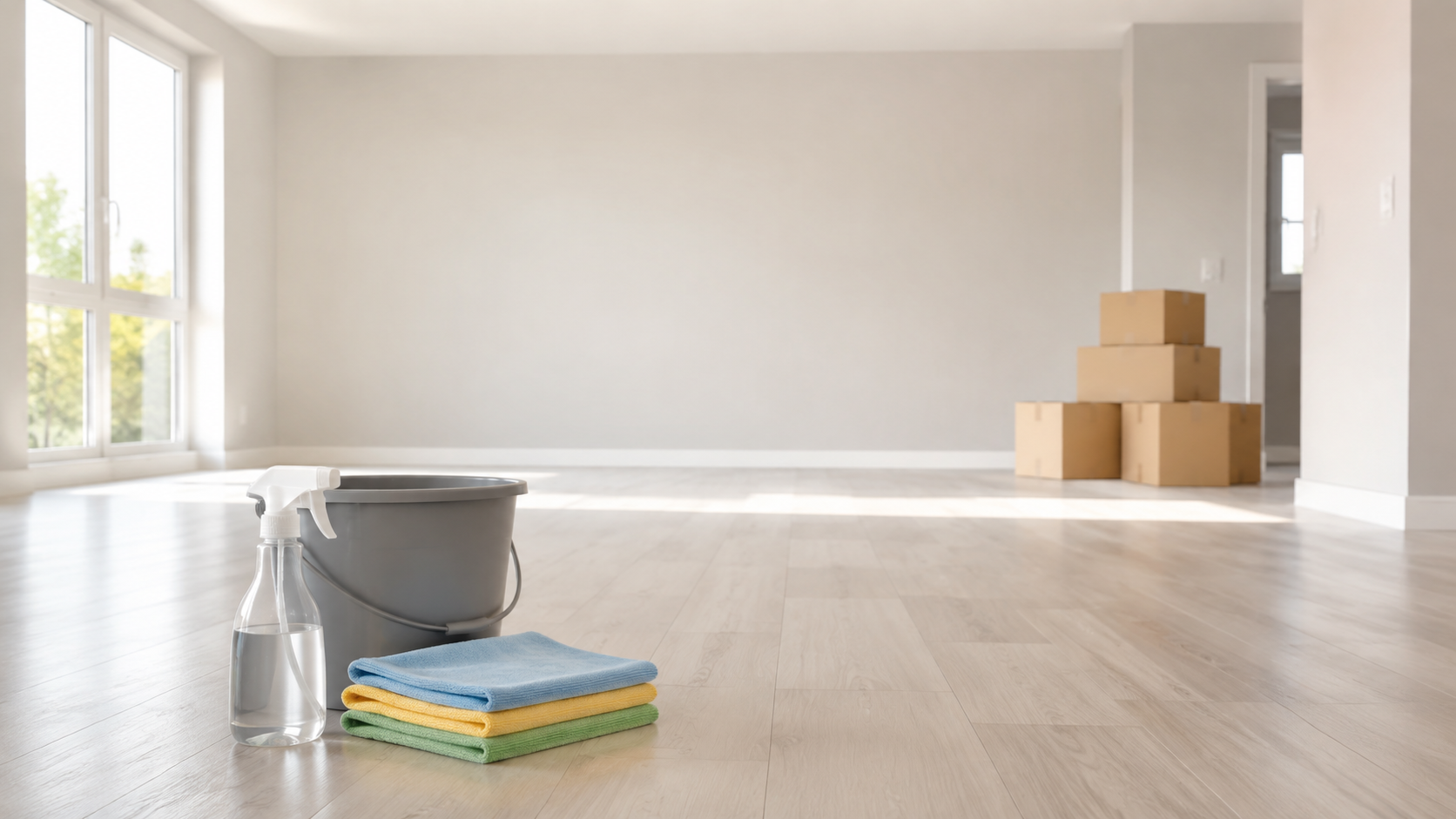
    • A stack of microfiber cloths, color-coded if possible so bathroom cloths never touch the kitchen
    • A vacuum with a crevice tool, a brush head, and an extension wand
    • A mop matched to your flooring, plus a bucket
    • All-purpose cleaner, a bathroom or lime-scale cleaner, and glass cleaner
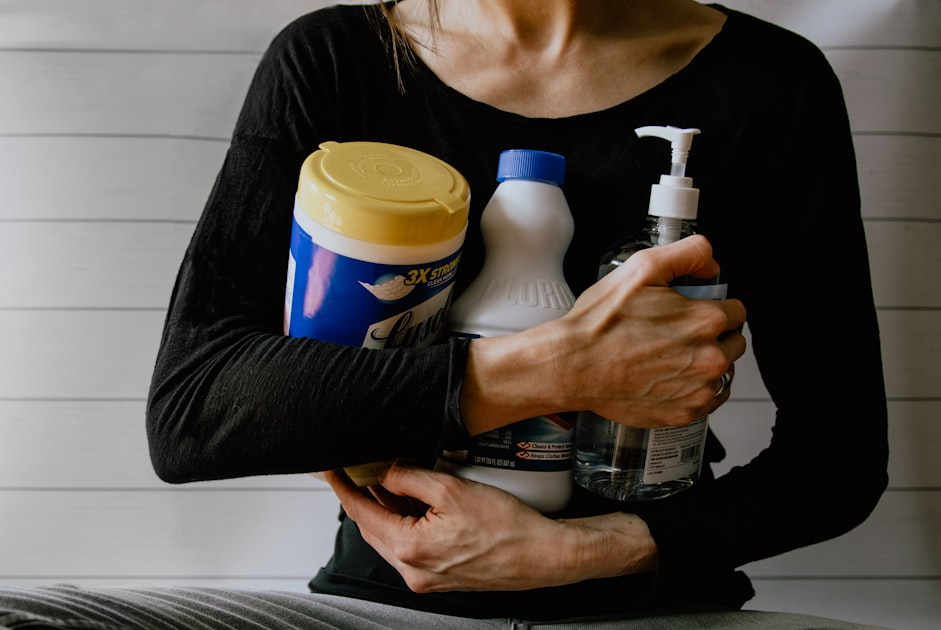
    • A disinfectant labeled for the exact surfaces you intend to treat
    • Gloves, heavy trash bags, a step stool, and a roll of paper towels

    Understand what disinfecting actually requires before you start using it. Cleaning is the removal of dirt and residue. Disinfecting is a second, separate pass that reduces germs on hard surfaces that are already clean, and it only works if the surface stays visibly wet for the dwell time printed on the label. Spraying and immediately wiping accomplishes almost nothing. And never combine products, especially bleach with anything ammonia-based, because those fumes are genuinely dangerous in a closed room.

    Step Three: The Top Layer

    Start at the ceiling and work down to roughly shoulder height throughout the entire home. Ceiling fan blades, light fixtures, smoke detector housings, air vents and return grilles, the tops of door frames, upper cabinet exteriors, closet shelving, and the bathroom exhaust fan cover.

    Vacuum these surfaces with a brush attachment first wherever you can, then wipe. Going straight to a damp cloth on heavy dust just turns it into a paste that smears into the finish.

    Step Four: The Kitchen, Inside and Out

    The kitchen earns its own step because every surface in it eventually touches food or the hands that handle it. Empty each cabinet and drawer completely, vacuum the corners, and wipe the interiors. Let them dry all the way through before you line a shelf or stack anything, because trapped moisture in a closed cabinet is how you end up with a musty smell in month two.

    Take the refrigerator apart as far as the shelves and drawers allow and clean the grooves where old spills settle and harden. If there is an ice maker or a water dispenser, check the manufacturer’s guidance on flushing the line and swapping the filter. That filter has an age nobody disclosed to you.

    Then the grease: stovetop, oven interior, range hood, filter screen, and backsplash. What this takes depends entirely on what you inherited. A well-kept home may need one pass with an all-purpose cleaner. A unit with years of buildup needs a degreaser applied and left to sit. Finish the room with the sink, faucet, disposal switch and counters, cleaned first and then disinfected.

    Step Five: The Bathrooms

    Bathrooms hold moisture, and moisture holds odor and residue, so nothing here responds well to speed. Working down from the fan cover you already cleaned, move through mirrors, counters, cabinet interiors, sinks, faucets, and the toilet, and leave the tub and shower for the end.

    Where there is soap scum or hard-water scale, apply the right product and walk out of the room for several minutes. Dwell time does the work that scrubbing does, without wearing the glaze off the fixture. On the toilet, clean the outside first, including the flush handle, the seat hinges and the base where dust and residue collect, and use a separate brush or a disposable tool for the bowl.

    While you are down there, look at the grout lines and the drain. Dark grout is usually just staining. But mildew that returns, drywall that feels soft under pressure, or a musty smell that will not clear points to water going somewhere it should not. That belongs in a maintenance request, not a cleaning bucket.

    Step Six: Contact Points Everywhere Else

    These are the surfaces people forget and then notice constantly once they live there. Wipe them, then disinfect the hard ones:

    • Door knobs, deadbolts, and the keys you were just handed
    • Every light switch plate, the thermostat, and any remote left behind
    • Handrails, banisters, appliance buttons and touchpads
    • Mailbox keys, garage door openers, and gate or alarm keypads
    • The washing machine drum and gasket, and the dryer lint trap housing
    • Pantry shelves, utility closet handles, trash bin lids, and the inner edge of exterior doors

    None of it takes long individually. Collectively it is the entire difference between a home that feels cared for and one that just feels recently vacated.

    Step Seven: Floors, Last and All at Once

    Now that every particle of dust has already fallen, do the floors as one continuous job from the far corner of the house toward the door you will leave through.

    Vacuum carpet slowly, and pass over each area in more than one direction rather than one fast lap. Visible staining, embedded pet hair, or an odor you can smell from the doorway generally means extraction by a professional is the better investment. On hard flooring, match the product to the material, because too much standing water swells wood and laminate at the seams, and acidic or harsh cleaners will dull natural stone permanently.

    One note on air quality while you work: if anyone in the household deals with allergies, asthma or fragrance sensitivity, choose low-odor products and keep air moving the entire time. Open windows if the weather cooperates and run the bathroom fans. The goal is a room that smells like nothing, not a room that smells like a citrus grove sitting on top of an old problem.

    When It Makes More Sense to Hire It Out

    Some properties are past the point where a weekend of your own labor is the rational choice. A professional move-in deep clean is worth pricing when the home sat vacant for months, came directly out of construction or renovation, housed pets, or shows heavy buildup in the kitchen and bathrooms. It is equally worth it on pure arithmetic when you are already coordinating movers, utility transfers, school enrollment and a stack of address changes in the same week.

    A crew works fastest in an empty house, which is exactly the window you are in, and it means your first night in the new place is not spent kneeling in front of a cabinet with a scrub brush. Annas Cleaning provides insured, detail-oriented move-in and move-out cleaning for across Lake Worth Beach, FL, and scheduling is available online.

    Whoever you call, be specific about the condition of the property and about your priorities. Ask in plain terms whether the quote covers cabinet interiors, appliance interiors, blinds, baseboards and interior windows, because move-in checklists vary widely between companies and the gap between what you assumed and what was quoted is where every bad experience starts. If there is construction dust, heavy staining, or a real volume of trash left behind, disclose it when you book so the scope and the timeline are honest on both sides.

    The Last Walk Through

    When the work is finished, walk the home one more time with fresh eyes. Confirm that the food storage areas are dry, the bathrooms have soap and paper, the floors are clear, and every bag of trash has left the building. Then carry in only what tonight actually requires: bedding, toiletries, towels, a few dishes, and a small kit for touch-ups.

    You are not trying to reach perfect before you unpack. You are trying to reach a clean foundation. Once the kitchen, the bathrooms, the floors and every surface your hands find daily have truly been reset, move-in day gets to be about arranging your new home instead of wondering what the last people left behind in it.

  • Move-In Sanitation: What to Clean Before You Unpack a Single Box

    Move-In Sanitation: What to Clean Before You Unpack a Single Box

    The truck is unloaded, the keys are finally yours, and every instinct says to start opening boxes. Resist it for one more day. Before a single plate lands in a cabinet or a mattress goes on a bed frame, the property deserves a full reset. This guide to move-in sanitation walks you through the surfaces that actually affect how the home feels, smells, and functions from your very first night in it.

    A house can photograph beautifully and still hide sticky cabinet shelves, dust-caked vents, soap film in the shower, and germs sitting on every handle in the place. It makes no difference whether you just closed on a house, signed a lease on an apartment, or picked up a freshly renovated unit in [CITY] — sanitation is the step that converts an empty property into a home you can genuinely relax in.

    Clean First, Unpack Second

    An empty home is the easiest home you will ever clean. Nothing blocks the baseboards, closet floors are bare, cabinets are open, and every corner is reachable without shoving furniture around. If your timeline allows any flexibility at all, schedule your cleaning for the day before the movers arrive, or for the first hour you have access to the property.

    Start with a slow walkthrough rather than a bucket. Open every cabinet and drawer, peek behind appliances where you can reach, run a finger along window tracks, and give the bathrooms an honest inspection. Photograph any damage, staining, or maintenance problem before you touch it — this matters enormously in a rental. Cleaning should never erase evidence of an issue your landlord or property manager needs to see documented.

    Then gather your supplies in one place: microfiber cloths, a vacuum with attachments, a mop, an all-purpose cleaner, a bathroom cleaner, glass cleaner, gloves, and trash bags. When you disinfect, pick a product labeled for that specific surface and actually read the directions, including how long the surface must stay wet to work. Keep the two ideas separate in your mind: cleaning lifts dirt and residue, while disinfecting is a second pass that reduces germs on suitable hard surfaces.

    Move-In Sanitation, Room by Room

    Sequence saves you from redoing work. In every room, start high and finish low so falling dust lands on surfaces you have not cleaned yet, and leave all floors for the very end of the job.

    The Kitchen: Where Your Food Will Live

    No room earns more attention than this one, because food, dishes, and hands make contact with nearly every inch of it. Empty each cabinet and drawer completely, vacuum the crumbs out of the corners, then wipe the interiors with an appropriate cleaner. Let everything dry fully before you line a shelf or stack a single pot.

    Move on to the parts hands touch constantly: cabinet pulls, light switches, the refrigerator handle, stove knobs, and the exterior of any built-in appliance. Pull the refrigerator shelves and drawers and clean the seams where old spills collect. If there is an ice maker or water dispenser, check the manufacturer’s guidance on flushing the line or swapping the filter.

    Degrease according to what you find. The stovetop, oven interior, range hood, and backsplash may need nothing more than a wipe in a well-kept home, or a genuine deep clean in a unit with baked-on buildup. One firm rule: never combine cleaning products, particularly bleach with anything ammonia-based. Those fumes are genuinely hazardous.

    Close out the room by cleaning and then disinfecting the sink, the faucet, the garbage disposal switch, and all counters. Once those surfaces dry, the kitchen is ready and you can unpack it without second-guessing what is underneath your dishes.

    Bathrooms: Moisture Hides What a Quick Wipe Misses

    Bathrooms hold onto residue and odor because they stay damp, so a surface pass will not cut it. Begin overhead with the exhaust fan cover, vents, light fixtures, and upper shelving. Work your way down through mirrors, counters, cabinet interiors, sinks, faucets, the toilet, and finally the tub and shower.

    Where soap scum or mineral deposits have built up, apply a product made for that job and let it sit and do the work instead of attacking it with a scrub brush immediately. On the toilet, clean the outside first — the flush handle, the seat hinges, the base — and save the bowl for last using a separate brush or a disposable tool.

    Do not skip the shower curtain rod, the drain, and the grout lines. Darkened grout is often just surface staining, but mildew that keeps returning, drywall that feels soft, or a musty smell that will not clear are signals of something structural. Report those instead of scrubbing around a possible leak.

    Bedrooms, Closets, and Living Spaces: Dust Is the Real Enemy

    In the rest of the home, dust is usually the whole story. Vacuum shelves, closet ledges, vents, and window tracks first, then wipe them. Dust ceiling fan blades and light fixtures gently so you are not redistributing everything you just removed, then hit switches, door handles, and curtain rods.

    Baseboards and room edges deserve a real look. That is where pet hair, renovation dust, and whatever the last occupants left behind tend to gather. If the windows have blinds, clean them with a microfiber cloth or a vacuum attachment before any furniture comes through the door.

    On carpet, vacuum slowly and pass over each area in more than one direction. Visible staining, lingering odor, or heavy pet hair usually means professional treatment is the smarter call. On hard flooring, match the product to the material — excess water ruins wood and laminate, and aggressive cleaners will strip the finish off natural stone.

    The High-Touch Details Most People Skip

    The tiniest surfaces are the ones you notice a week later. Wipe and disinfect door knobs, locks, keys, light switches, the thermostat, any remote controls left behind, handrails, appliance buttons, mailbox keys, and garage door openers.

    Then chase down the easy-to-forget spots: the inside of the washing machine drum, the dryer lint trap housing, pantry shelving, utility closet handles, trash bins, and the inner edge of every exterior door. None of it takes long, and together it is the difference between a home that feels cared for and one that just feels vacant.

    If anyone in the household deals with allergies, asthma, or fragrance sensitivity, reach for low-odor products and keep air moving the entire time you work. Open the windows if the weather cooperates and run the bathroom fans. A room should smell fresh because it is clean, not because a heavy scent is sitting on top of an odor.

    When a Professional Deep Clean Is the Better Call

    Some move-ins are simply beyond a routine cleaning. A professional move-in deep clean is worth considering when the property sat vacant for months, came out of a renovation, housed pets, or shows real buildup in the kitchen and bathrooms. It is also the practical choice when you are already juggling utility transfers, movers, school enrollment, and a long list of address changes.

    A trained team can handle the detail work while the space is still empty, which spares you from spending your first night in a new home on your knees scrubbing a cabinet. For families on a deadline, renters with a tight move window, and homeowners who want a clean slate, those recovered hours are worth real money. Annas Cleaning provides insured, detail-focused cleaning for move-in and move-out transitions, with straightforward online scheduling for in Opa Locka, FL.

    Before you book anyone, be direct about the condition of the property and what matters most to you. Ask specifically whether the quote covers cabinet interiors, appliances, blinds, baseboards, and interior windows, because move-in checklists vary widely from company to company. If there is construction dust, heavy staining, or a significant amount of trash left behind, say so upfront so the scope and the timeline are realistic for everyone.

    Finish With a Ready-to-Unpack Walkthrough

    When the cleaning is done, walk the home one last time with fresh eyes. Confirm the food storage areas are dry, the bathrooms have basic supplies, the floors are clear, and all trash is out of the house. Then bring in only what you need for tonight: bedding, toiletries, towels, a handful of dishes, and a small kit of cleaning supplies for touch-ups.

    Nothing has to be perfect before you unpack. What you are after is a clean, comfortable foundation. Once the kitchen, the bathrooms, the floors, and every surface your hands touch daily are truly reset, you get to spend move-in day arranging your new space instead of wondering what the last occupants left behind.

  • What a Deep Clean Protects in Your Lake Worth Beach, FL Home

    What a Deep Clean Protects in Your Lake Worth Beach, FL Home

    Deep cleaning gets sold as a treat. Something you book before guests arrive, or when the house has gotten away from you and you want it to feel new again.

    That framing undersells it. The more accurate way to think about a deep clean is as maintenance, the same category as changing an air filter or resealing a deck. Skip it long enough and you are not looking at a dirty house. You are looking at damaged surfaces, and those cost real money to fix.

    The Damage Nobody Budgets For

    Four things in almost every home deteriorate quietly when buildup is allowed to sit.

    Shower Glass

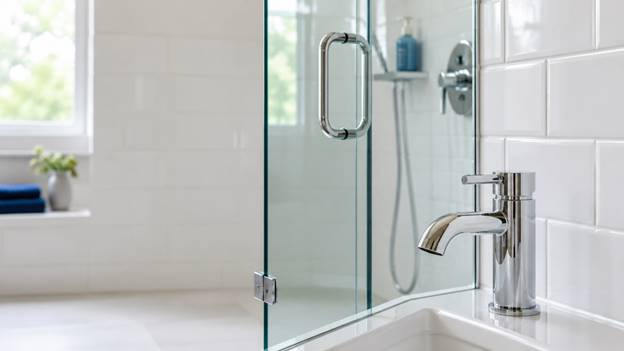
    Hard water leaves mineral deposits on glass. Left long enough, those deposits stop sitting on the surface and begin etching into it. Once glass is etched, no product removes it, because there is nothing left to remove. The glass itself is pitted. Replacing a shower enclosure runs into the hundreds or thousands of dollars.

    Grout and Tile

    Grout is porous by design. It absorbs moisture, soap residue, and whatever else reaches it, which is why it darkens gradually instead of suddenly. Saturated grout breaks down faster, and eventually the answer is resealing or full replacement rather than cleaning.

    Cabinet and Appliance Finishes

    Airborne cooking grease settles on cabinet fronts, the range hood, and the tops of upper cabinets. It is invisible for weeks, then tacky, then hardened. Grease left on a finish long enough dulls and discolors it permanently, and refinishing cabinetry is one of the more expensive jobs in a kitchen.

    Vents, Air, and Your HVAC

    Dust that collects in vents, registers, and around fixtures does not stay there. It circulates. It makes indoor air worse for anyone with allergies or asthma, and it forces your HVAC system to work harder than it was designed to, which shortens its life.

    The Math Most People Skip

    Two deep cleans a year is a predictable, modest line item. Replacing shower glass, regrouting a bathroom, or refinishing kitchen cabinets is not.

    Put differently: deep cleaning is maintenance on the finishes and fixtures you already paid to install. You spent that money once. This is what keeps it.

    How Often This Needs to Happen in Lake Worth Beach, FL

    Twice a year is the floor for a low-traffic home that already has recurring standard cleanings in place. Every three to four months fits the average family. Every three months is right for households with young children, multiple pets, allergies, or anyone who cooks heavily.

    Homes with no recurring service between deep cleans should plan on quarterly, because buildup accelerates without maintenance and each visit has more to undo.

    One local note: if the water in your part of runs hard, the bathroom timeline moves faster than the rest of the house. Mineral scale on glass and fixtures is usually the first damage to become permanent.

    Standard Cleaning Cannot Do This Job

    This is not a criticism of standard cleaning. It is a description of what it is for. A standard cleaning covers counters, sinks, toilets, showers, mirrors, appliance exteriors, floors, and reachable dusting. It maintains a baseline, and it does that well.

    A deep clean is what establishes the baseline: hand-wiped baseboards and door frames, ceiling fans and light fixtures, window sills and tracks, degreased range hood and cabinet fronts, scrubbed grout, mineral and soap scum removal from glass and fixtures, high-touch points, and the areas behind and beneath accessible furniture.

    It takes two to three times the labor hours, which is why deep cleaning starts at $184 while standard cleaning starts at $144. The right sequence is a deep clean first, then recurring standard cleanings to hold it.

    The Bottom Line

    If you think of deep cleaning as an occasional indulgence, it will always feel skippable. If you think of it as maintenance on surfaces you already own, the schedule takes care of itself.

    Twice a year at minimum. Every three to four months for a busy household. And if you cannot remember your last one, the damage clock has already been running.

    Protect What You Already Paid For

    Tell us about your home and when it was last professionally cleaned, and we will tell you honestly whether a deep clean is the right call right now or whether a standard cleaning will hold you over.

    Deep cleanings start at $184, performed by a background-checked, fully insured team working from a detailed room-by-room checklist. Every visit is backed by our satisfaction guarantee: if any area is not right, we come back and fix it.

    Book your deep clean now and stop the damage clock.

  • Why You Should Consider Deep Cleaning

    Why You Should Consider Deep Cleaning

    Understanding Deep Cleaning

    Deep cleaning is crucial for maintaining a healthy home. Here’s what you need to know:

    • What is Deep Cleaning? A thorough cleaning of all areas, including hard-to-reach spots.
    • Frequency: Recommended at least twice a year.
    • Benefits: Removes dirt, allergens, and bacteria.
    • Professional Help: Consider hiring experts for a comprehensive clean.
    • Long-Term Savings: Prevents damage and prolongs the life of your belongings.